You have prepared your answers, researched the company and rehearsed the questions you want to ask. Then, the evening before, you open the wardrobe and wonder what on earth to wear. Sound familiar?
I am Deni Kiro, a personal stylist in London, and helping clients dress for interviews is a regular part of my work. The right job interview outfit will not get you the job, but the wrong one can distract from everything you came to say. This guide gives you a simple rule set, outfits by industry, separate advice for men and women, and a checklist for the 48 hours before you walk in.
What to Wear to a Job Interview: The Short Answer
If you remember nothing else, remember these five rules.
- Dress one step smarter than the team you hope to join. If they wear jeans, wear chinos or tailored trousers and a jacket. If they wear suits, wear your best one.
- Fit comes first. A well-fitted mid-price suit looks more assured than an expensive one that pulls or swamps you.
- Stay in quiet colours. Navy, charcoal, grey, white and soft blue let your face and your answers do the work.
- Wear something you have worn before. Interview day is not the day to discover that a shirt gapes or new shoes rub.
- Check every detail. Pressed fabric, clean shoes, no loose threads and nothing that needs adjusting while you talk.
How to Read the Company’s Dress Code Before You Go
In my experience, most interview outfit mistakes come from guessing. A little research tells you how formal to be.
- Look at the company’s own photographs. Careers pages, team pages and social media show what people actually wear to work.
- Search for employees on LinkedIn. Profile photos and event pictures give you a clear read of the house style.
- Ask the recruiter or the person who booked you. It is a sensible question, and it shows you are thinking ahead.
- Think about the role, not only the company. A client-facing role in a relaxed firm may still call for a jacket.
Not sure what each level looks like in practice? My London business dress code guide sets out business formal, business casual and smart casual in detail, with examples for men and women.
The first impression starts before you sit down, so the whole outfit should look settled from the moment you walk in.

Job Interview Outfits by Industry
Different sectors expect different levels of formality. Here is the quick match I use with clients.
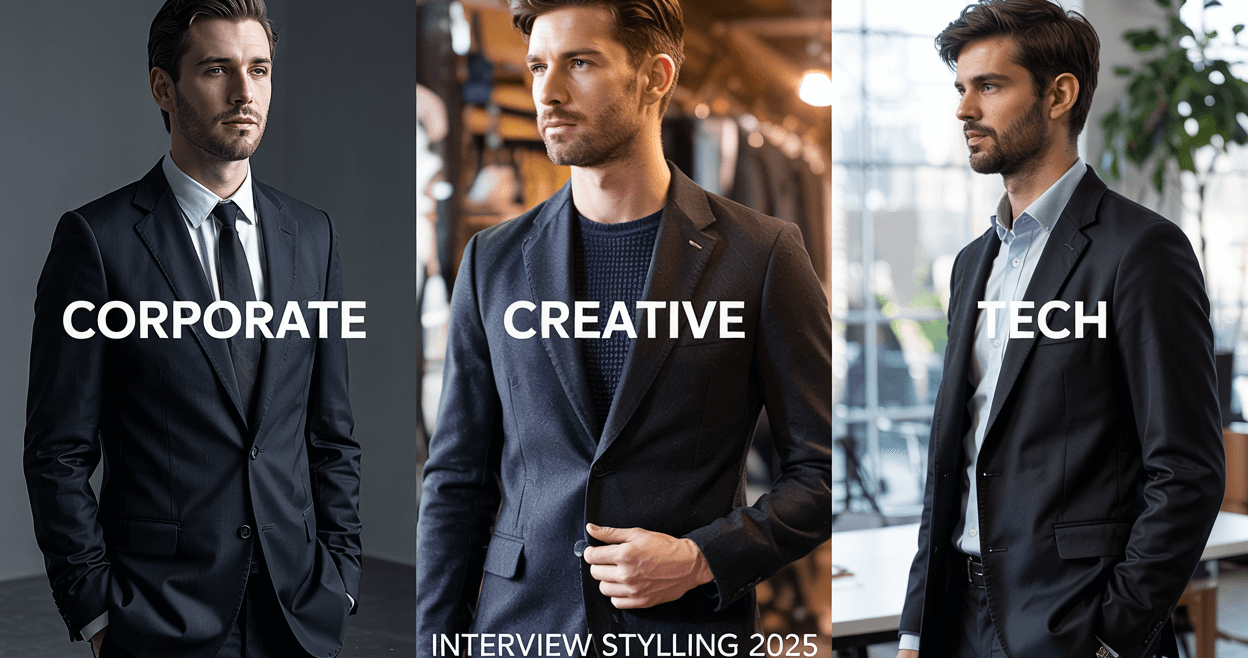
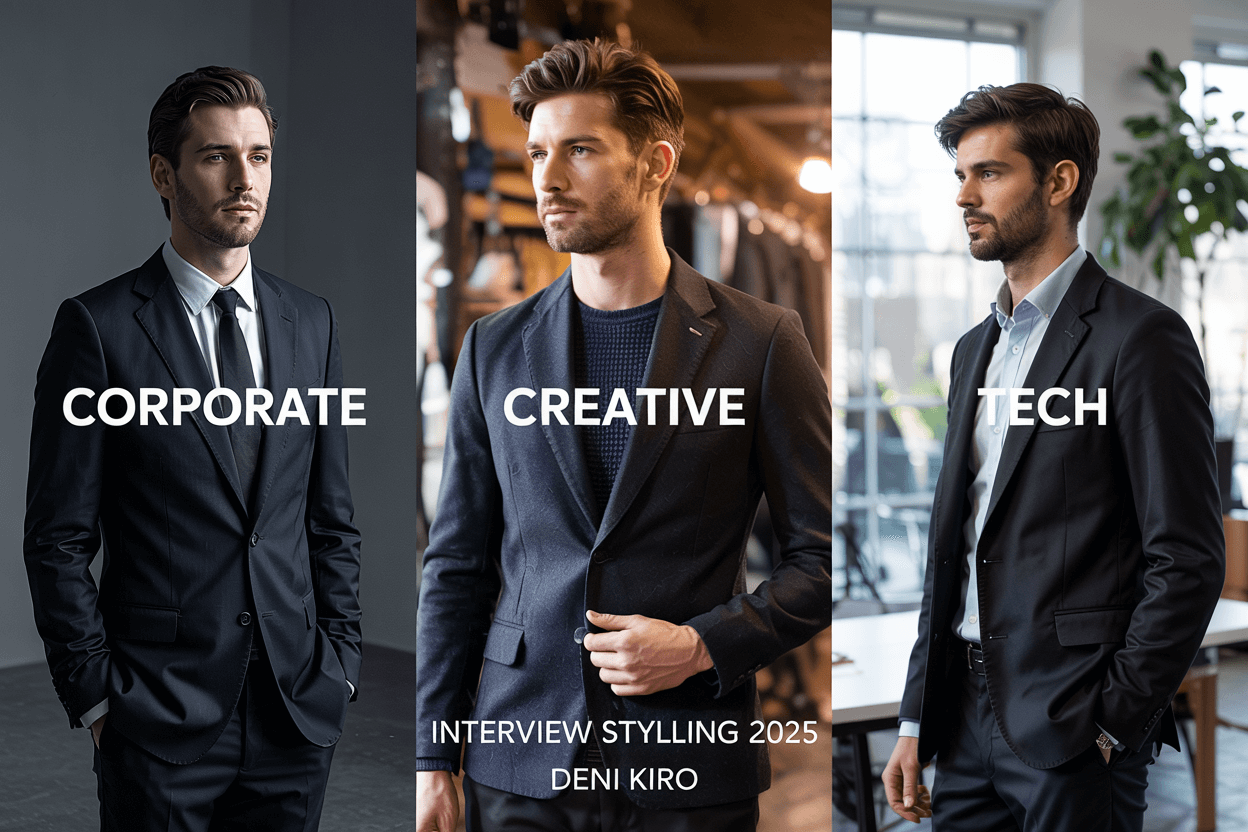
Seeing the three main levels side by side makes the difference easier to judge.
Corporate, Finance and Law: The Corporate Interview Outfit
This is still suit territory. Choose navy or charcoal, a plain or subtly patterned fabric and a cut that fits you properly at the shoulders. Men add a crisp pale shirt, a silk tie in a quiet pattern and polished Oxford or Derby shoes. Women can choose a trouser or skirt suit with a silk or cotton blouse and closed court shoes with a heel you can walk in confidently. Keep jewellery and watches simple.
Tech and Start-Ups: What to Wear to a Tech Interview
Should you wear a suit to a tech interview? Usually not. A full suit can look out of step in a relaxed office, but scruffiness never helps. Aim for elevated smart casual: well-cut trousers or chinos, a good shirt or fine knit and a blazer you can wear open. Clean leather or suede shoes look more considered than trainers, unless you know the team wears them every day.
Creative Industries: The Creative Job Interview Outfit
Creative interviews are the place to show taste, but one point of interest is enough. Build on smart separates, then add a strong texture, an unexpected colour or a well-chosen accessory. Interviewing for a design role? A piece with an architectural cut or a beautiful fabric can say more than a portfolio cover.
Fashion and Retail Interviews
Interviewing at a fashion house or a high-street retailer? Show that you understand the brand without dressing as a walking advertisement. Look at how its campaigns and stores style the clothes, then wear your own version of that look. A single piece from the brand can be a nice touch; a head-to-toe logo outfit rarely is.
Interview Outfits for Men
Suit or no suit? It is usually the first question. If in doubt, wear the suit and lose the tie if the room is relaxed. It is easier to dress down on the day than to dress up.
- The suit: navy first, charcoal second. A single-breasted, two-button cut works for almost every interview.
- The shirt: white or pale blue, ironed, with a collar that sits flat under the jacket.
- The tie: silk, in a muted colour or a small pattern. Skip novelty ties.
- The shoes: black Oxfords for the most formal settings, dark brown Derbies or loafers for everything else, with a belt to match.
- The smart casual version: wool trousers or chinos, an Oxford shirt or fine merino knit and a navy blazer.
In menswear, the details carry the outfit: sleeve length, trouser break and a collar that fits. My men’s styling services cover interview preparation, and the In-Store Personal Styling For Men session, from £450, means arriving to a private fitting room with outfits already selected for your body shape, lifestyle and budget.
Interview Outfits for Women
Women have more options, which can make the choice harder rather than easier. Choose the outfit that lets you forget about your clothes once you sit down.
- A trouser or skirt suit in navy, charcoal or a soft neutral for corporate interviews.
- Smart separates: tailored trousers or a knee-length skirt with a silk or cotton blouse and a blazer, for most other settings.
- A tailored dress in a solid colour, with a jacket if the company is formal.
- Shoes: court shoes with a moderate heel or smart flats in leather or suede.
- A structured bag large enough for a notebook and copies of your CV.
If you want to build beyond one interview outfit, my guide to performance styling for a wardrobe that works harder explains how to choose versatile pieces for work.
Choosing Your Interview Colours
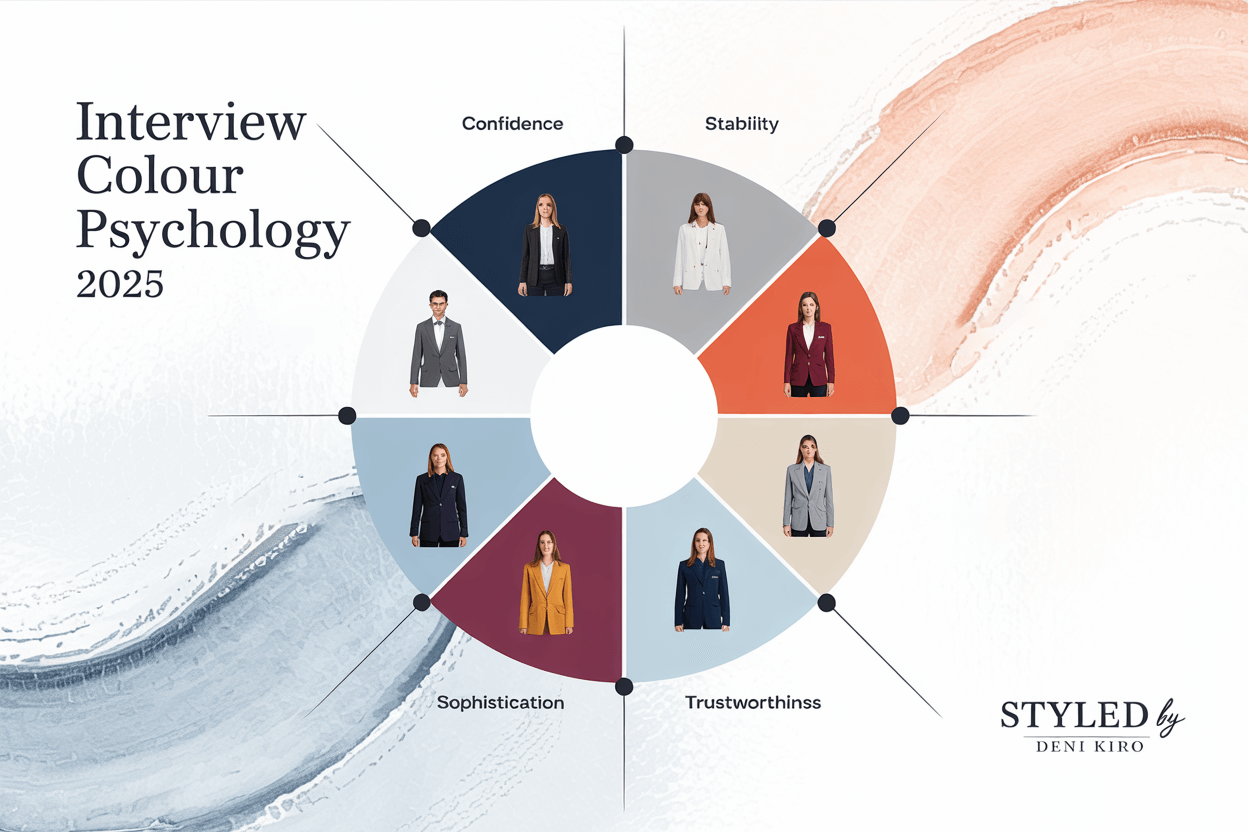
Colour is a quick way to change how an outfit reads. In my experience, navy feels trustworthy, charcoal feels composed and soft blue feels approachable, which is why they are my default interview colours. Black can look severe in some industries, and bright colours work best as one accent near the face, such as a scarf or tie.
The colours that suit your complexion matter just as much as the message. For the thinking behind this, read my piece on how colour influences professional perception.
This chart sums up how I use each interview colour.
Fit: The Detail Interviewers Notice
Poor fit reads as carelessness, however much the clothes cost. Check each piece against these guidelines before the day.
In my experience, a well-altered suit looks more impressive than an ill-fitting designer one. A tailor can shorten sleeves and hem trousers quickly, so leave time for it.
Grooming and Finishing Touches
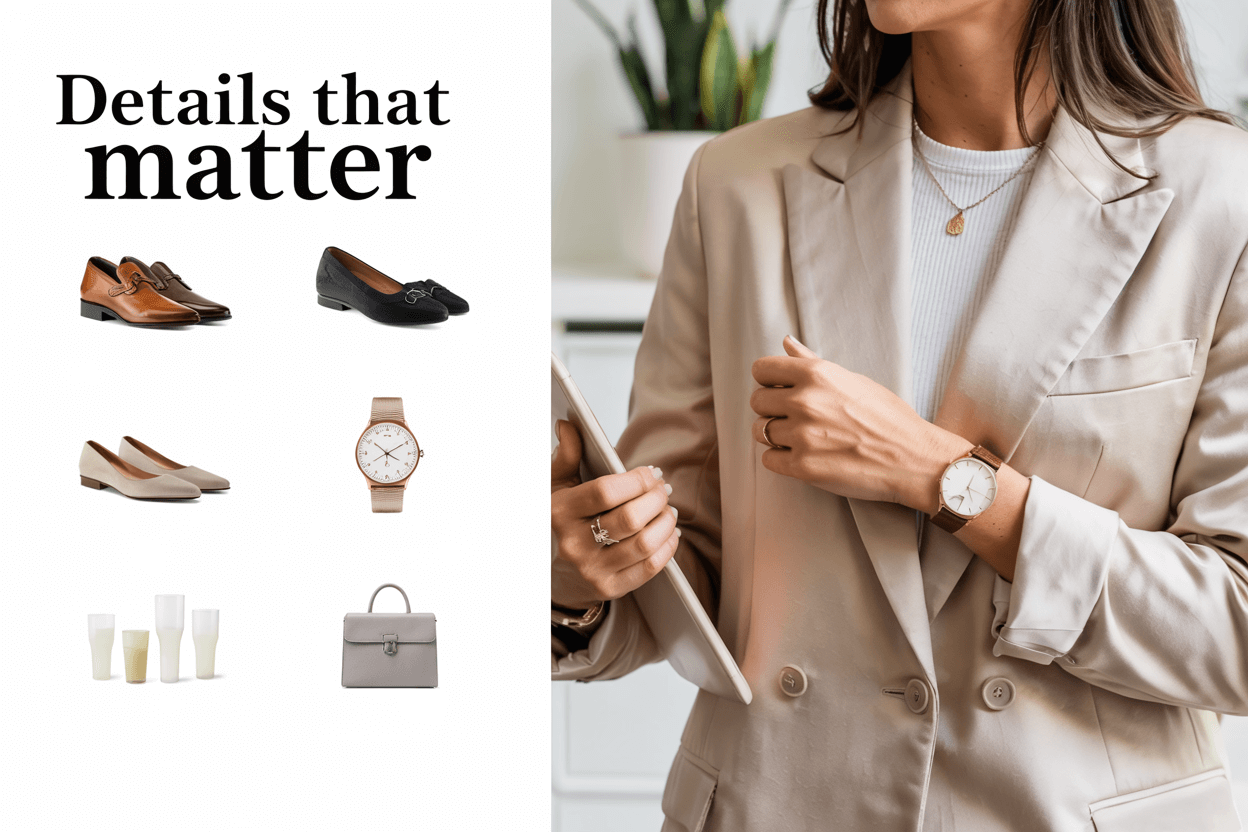
The outfit is only half the picture. Professional grooming makes the clothes look intentional.
- Hair: neat and styled the way you would wear it on a good working day.
- Nails: clean and tidy, natural or with a subtle polish.
- Fragrance: light or none. You want to be remembered for your answers.
- Bag or briefcase: clean, organised and large enough for your papers.
- Notebook and pen: professional and ready to use.
These are the small details I check with every interview client.
Video and Phone Interviews
A video interview still counts. Dress fully from the waist up, and ideally all the way, because you may need to stand.
- Choose solid colours. Fine stripes and small checks can shimmer on some cameras.
- Avoid white against a white wall. A mid-tone shirt or knit gives your face definition.
- Check the frame. Sit at eye level with light in front of you and a tidy background behind.
- Dress for the phone too. I still suggest it, because being dressed for work puts you in a working frame of mind.
Common Interview Outfit Mistakes
- Visible logos: they distract from you and can look like you are trying too hard.
- Very trend-led pieces: save them for after you get the job.
- Uncomfortable clothes: tight waistbands and new shoes show in your posture.
- Neglected details: scuffed shoes, missing buttons or pilled knitwear suggest carelessness.
- The wrong level of formality: being far more or far less dressed than the room suggests you did not do your research.
Your 48-Hour Interview Outfit Checklist
Reliable interview outfits are planned, not grabbed. Two days before, run through this list.
- Try on the complete look, including shoes, bag and coat, and sit down in it.
- Fix anything that needs fixing: cleaning, pressing, a button or a quick alteration.
- Plan the journey. Will you walk, need an umbrella or wait outside? Choose the coat and shoes accordingly.
- Check the weather forecast and adjust layers.
- Prepare a back-up option, in case of a spill or a last-minute change of format.
Building a Small Interview Wardrobe
If you are interviewing more than once, a few reliable pieces save a great deal of stress. This flat lay shows the core of the interview wardrobe I build with clients.
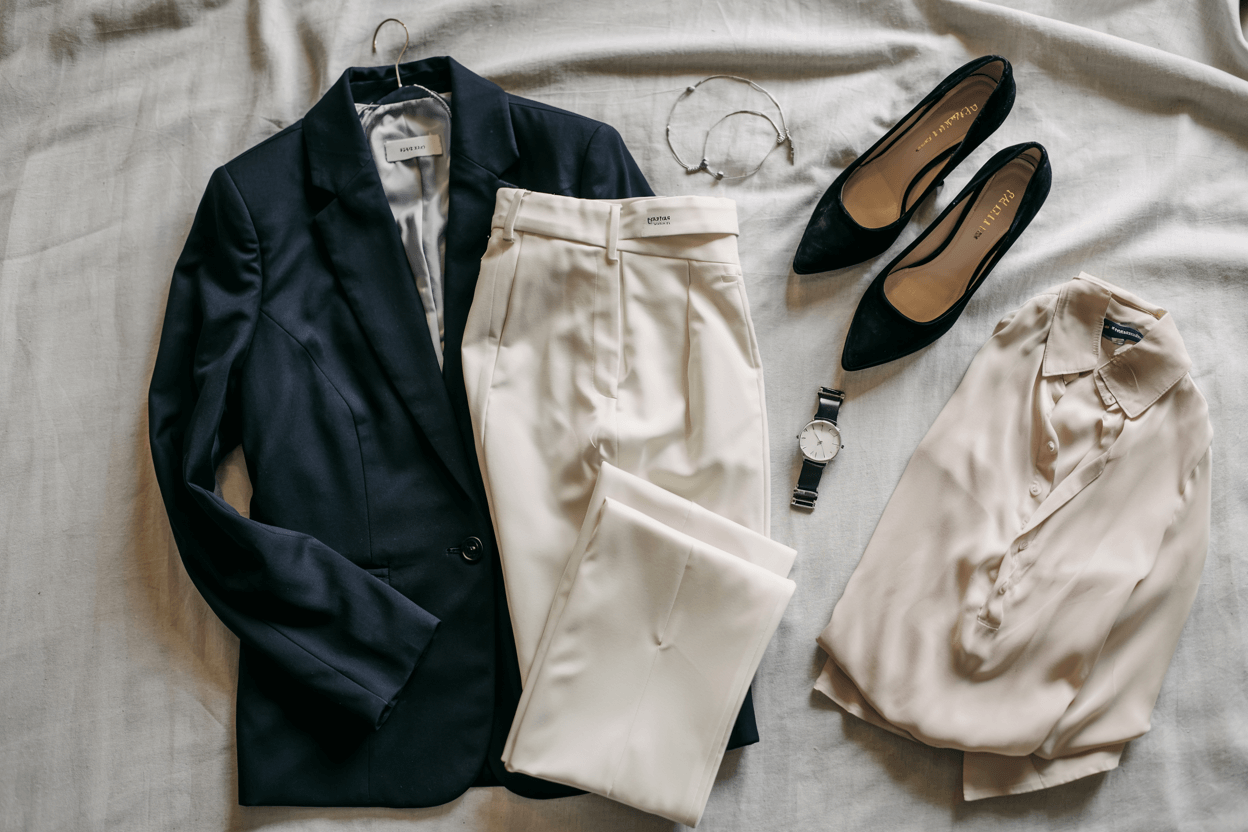
For men: a navy suit and a charcoal or mid-grey suit, three white or light blue shirts, two or three quiet silk ties, black Oxfords and dark brown Derbies with matching belts, plus a navy blazer and grey or stone trousers for less formal rounds.
For women: a dark suit with trouser and skirt options, three blouses in white, cream and light blue, a tailored blazer that works with several bottoms, a knee-length shift dress, court shoes, smart flats and a neutral leather bag.
Real Clients, Real Interviews
Every interview is different, and no outfit wins a job on its own. These two clients show what the right preparation can support.
James, a finance executive moving up. James was moving from a mid-level role to an executive position and needed to project more authority while staying approachable. We invested in bespoke suiting with subtle contemporary details, with the focus on exceptional fit and quality accessories. He secured the position, with a major increase in responsibility and compensation.
Sarah, a career change into tech. Sarah was moving from a corporate environment to a tech firm and needed to show cultural fit without losing professional credibility. We built a versatile wardrobe of separates with architectural details and subtle creative touches. She went through several interview rounds and secured the role against strong competition.
How I Help You Prepare for an Interview
Some clients come to me weeks before a big interview; others call when the date is already in the diary. A one-to-one style consultation (£150, about an hour, online or in person) is the place to start: we talk through your lifestyle, your work and what you already own, and you leave with a clear plan for the interview. If you would like to know exactly what happens in that hour, my guide to what to expect from a personal style consultation walks you through it.
Short on time? With Luxury Personal Shopping (£450), I pre-select pieces to your brief and bring them to your home or hotel to try on. All three services and their prices are also listed on my personal stylist London prices page.
Job Interview Outfits: Frequently Asked Questions
What should I wear to a job interview?
Dress one step smarter than the team you hope to join, in clothes that fit well and that you have worn before. For corporate roles, that means a suit; for tech and creative roles, smart separates with a jacket usually work. Stick to quiet colours such as navy, charcoal and soft blue.
Should I wear a suit to an interview?
For corporate, finance, law and most client-facing roles, yes. For tech, start-ups and creative companies, a full suit can look out of step, so choose tailored trousers, a good shirt or knit and a blazer instead. If you are unsure, wear the suit and leave the tie at home if the room is relaxed.
What should men wear to a job interview?
A dark suit in navy or charcoal, a pale shirt, a quiet silk tie and polished Oxford or Derby shoes with a matching belt cover most formal interviews. For smart casual companies, swap the suit for wool trousers or chinos, an Oxford shirt or fine knit and a navy blazer.
What should I wear to a tech interview?
Elevated smart casual: well-cut trousers, a good shirt or merino knit and a blazer you can wear open. Clean leather or suede shoes look more considered than trainers, unless you know the team wears trainers every day.
What colours are best for a job interview?
Navy, charcoal, grey, white and soft blue are reliable choices because they look composed without distracting. Use brighter colours as a single accent, such as a scarf or tie, and choose shades that suit your complexion.
What should you not wear to a job interview?
Avoid visible logos, very trend-led pieces, anything uncomfortable or untested, and clothes with neglected details such as scuffed shoes or missing buttons. Avoid being far more or far less formal than the company, which suggests you have not done your research.
The Short Version
- Dress one step smarter than the team you want to join.
- Research the dress code through the company’s photographs, LinkedIn and the recruiter.
- Fit first, then colour: quiet tones, tailored shapes and pieces you have worn before.
- Men: navy or charcoal suit, pale shirt, quiet tie, polished shoes, or a blazer and trousers for smart casual firms.
- Women: a suit, smart separates or a tailored dress, with shoes you can walk in confidently.
- Plan 48 hours ahead, including grooming, the journey and a back-up outfit.
Have you got an interview coming up? If you would like your outfit planned around the role and the company, the free initial consultation is a simple place to start.