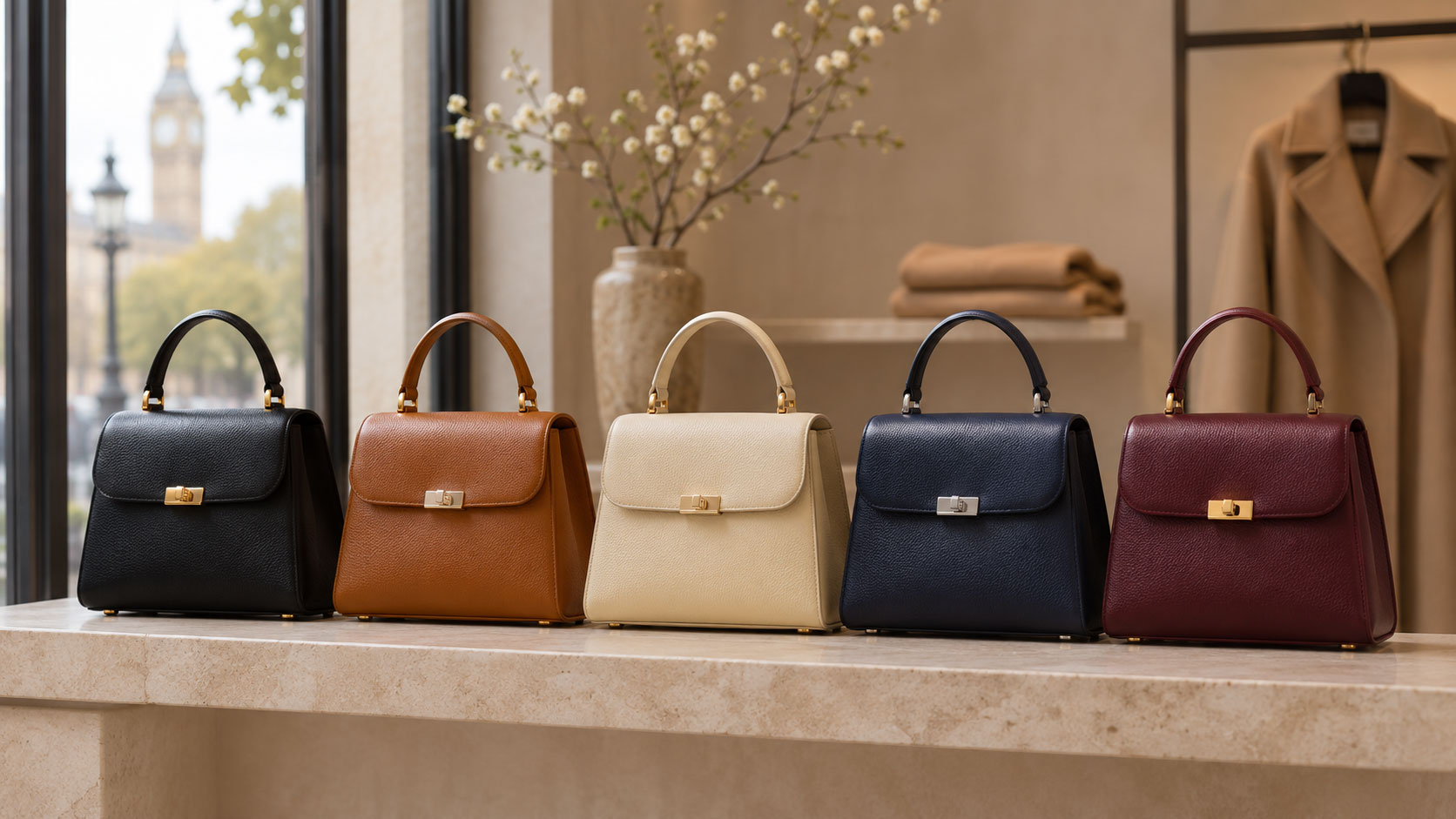
You have decided on the bag. You may even have decided on the shape. Then the sales assistant asks the question that stalls almost everyone: which colour? If you are buying one designer bag to carry for years, the colour matters more than the model, because the colour decides how many of your outfits it will actually join. My guide to timeless designer bags for everyday covers which bags earn their place; this one covers colour alone. Your first designer bag should be the neutral that matches the coats and shoes you already own and flatters your colouring: black if your wardrobe runs cool and high contrast, tan or chocolate if it runs warm, navy if you sit between the two. Your second bag is where colour begins.
The rest of this guide shows you how to apply that to your own wardrobe. When I work as a personal shopper in London, the bag conversation starts long before the boutique: with your coats, your shoes, your skin and hair, and the seasons you genuinely dress for. If you have never had your own palette worked out, my piece on colour analysis for your wardrobe explains why some colours lift your face and others drain it; a bag held close to the body obeys the same rules.
Shall we work out your order?
The Order to Buy: First, Second and Third Designer Bag
Most of my clients buy bags in the wrong order: first the colour they fell for in a window, then the neutral they realise they needed, then the attempt to make the first one work. Reverse that order and every bag earns its keep.
- First bag: your hardest-working neutral. It goes with your coats, your shoes and your most-worn outfit colours, five days out of seven.
- Second bag: a second neutral, or a quiet colour that behaves like one. Burgundy, navy, cream or a mid-brown, depending on what the first bag left uncovered.
- Third bag: the colour you love. Cornflower blue, red, bottle green, a metallic. The neutrals are doing the daily work, so this one is allowed to be pure pleasure.
Which neutral comes first depends on the palette your wardrobe already follows. This is the table I draw for clients on a sheet of paper in the fitting room.
Does your wardrobe fit one row cleanly? If it straddles two, choose from the row that matches your coats.
Black Designer Bag: The Default, Not Always the Answer
A black designer bag is the colour almost everyone buys first, and for many wardrobes it is right. Black goes with black, white, grey, navy, red and most prints, it hides marks, and it reads as polished in a meeting and at dinner. If you wear tailoring, dark denim and monochrome, start here.
Where black goes wrong is on women whose colouring is soft or warm. Held against a camel coat, a cream knit or warm-toned skin, it can look heavy and cut the outfit in half at the hip. If black clothing makes you look tired, a black bag on a shoulder strap will do the same, and the browns are your black.
The difference is easiest to see side by side, with black set against the softer neutrals that suit a warmer wardrobe.
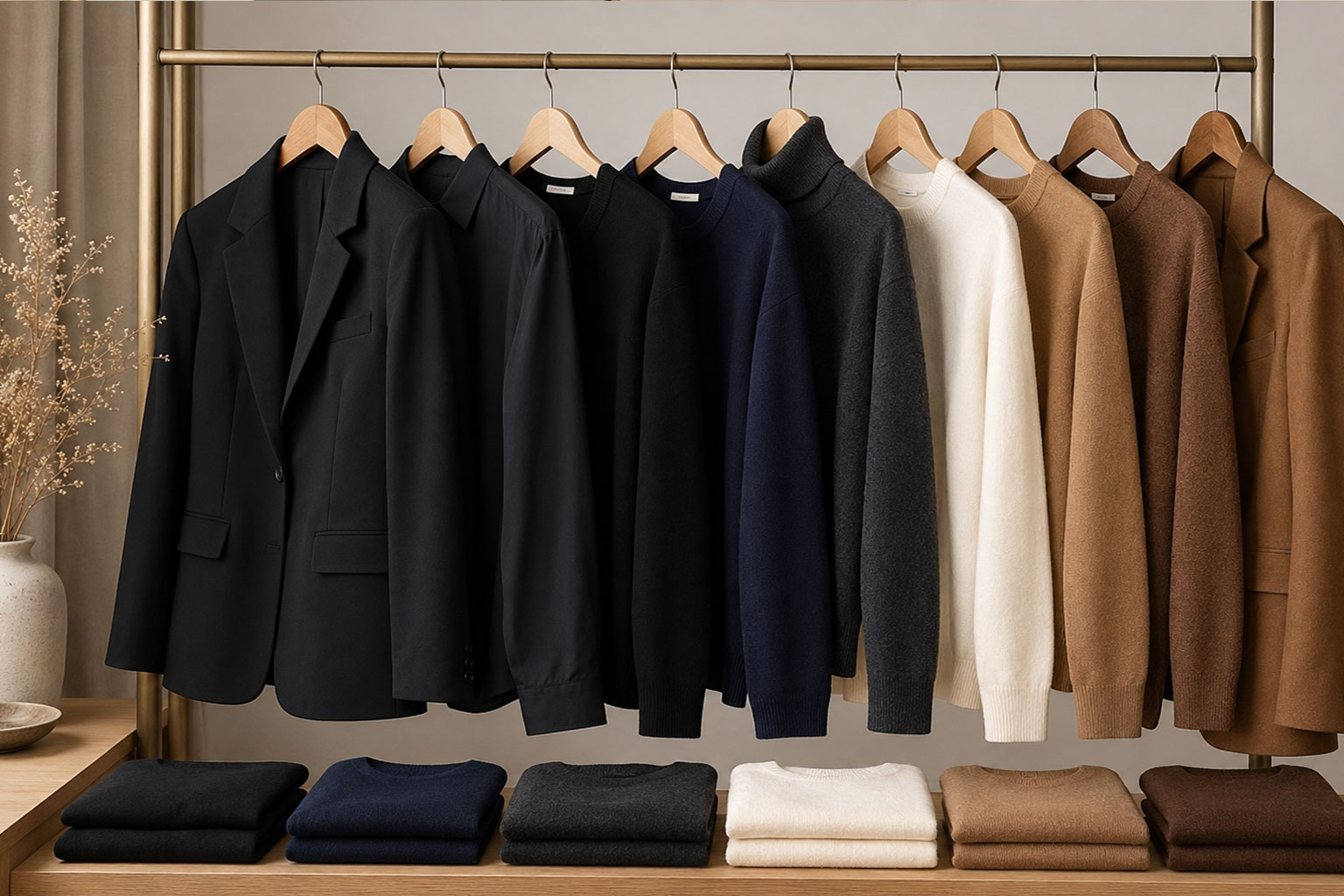
Black is an investment for cool and high-contrast wardrobes, and a risk only when it is bought by default rather than by decision.
Tan, Caramel and Chocolate: The Warm Neutral Family
If black is not yours, the browns are. Tan and caramel work with navy, white, cream, denim, olive and every shade of camel; chocolate does the same job in a deeper, more formal register and sits beautifully with black too, which surprises clients until they try it.
Three things to know before you choose a brown:
1. Match the undertone to your wardrobe. A reddish tan clashes with cool greys; a yellow caramel fights with blush.
2. Smooth tan develops a patina. It darkens where handled. Decide whether you will love that or resent it.
3. Chocolate is the stronger first bag for formal work. Tan reads as weekend; chocolate reads as boardroom.
Caramel in particular is the neutral I reach for when a client’s wardrobe runs warm, because it brightens the outfit rather than anchoring it.

Brown is an investment for warm and neutral wardrobes, and a sound second bag for almost everyone else.
White and Cream Designer Bags: Light, Expensive Looking, Honest About Upkeep
Few things make an outfit look more considered than a pale bag against dark clothing. A white or cream designer bag is a quick way to make a black dress, a navy suit or denim and a knit look deliberate.
The honest part: pale leather shows what it meets. In my experience dark denim and a wet London pavement both leave their mark, and a white bag carried daily needs cleaning in a way a black one never will. That makes it a second or third bag, unless your wardrobe is itself pale.
Choose cream, ivory or bone over optic white if your colouring is warm or soft; pure white suits cool, high-contrast colouring and little else. Would you rather have a bag you baby or a bag you forget about? Your answer tells you whether white belongs at position two or three. It is a considered second bag, and a risk as a first bag for anyone who commutes.
Blue is the colour family my clients ask about again and again, and the reason is simple: blue can be a neutral at one end and a statement at the other. The trick is knowing which end you are buying.
Navy sits softer against the face than black, works with every denim you own, and pairs with white, cream, camel, grey, burgundy and red without effort. If you have cool colouring but black feels harsh, buy navy first. The one wardrobe it struggles in is one built on black and charcoal, where the two deep shades can look like a mismatch.
Cornflower, Cobalt and Light Blue: The Pleasure Bag
Cornflower and cobalt lift a neutral outfit the way a scarf does, and ice blue is quietly lovely with white, grey and silver in summer. These are third bags. The question is not whether the blue is beautiful, because it will be, but how many of your outfits it sits with. If the honest answer is three, buy it as a treat.
Cornflower against camel and cream is the pairing I show clients who think a coloured bag will be hard to wear.

Navy is an investment; the brighter blues are a deliberate third bag, and a very good one.
Burgundy and Oxblood: The Colour That Behaves Like a Neutral
If I could persuade every client to buy one unexpected colour, it would be this one. Burgundy, oxblood and wine work with black, navy, grey, camel, cream, denim and most greens, they hide wear far better than pale colours, and they bring warmth to a dark winter outfit without shouting. On warm colouring, choose a brick-leaning burgundy; on cool colouring, a blue-leaning wine or oxblood.
It is the colour I suggest to women who want to move away from black without jumping to a bright, because it warms a grey-and-black outfit while still reading as a neutral in a meeting.

Burgundy is an investment as a second bag for nearly every palette; the rare risk is a wardrobe built entirely on warm pastels, where it can look heavy.
Red, Green and Metallics: Choosing the Third Bag
By the third bag the rules relax, but not completely.
- Red. A true red with black, white, navy or denim is one of the quickest ways to look dressed. Blue-red for cool colouring, poppy red for warm.
- Green. Bottle and forest green behave almost like a neutral with camel, cream, navy and brown. Brighter greens are seasonal; buy them as such.
- Metallics. Silver is the evening answer for cool wardrobes; soft gold or bronze for warm ones. Keep the hardware on your neutral bags in the same metal family and the metallic bag slots in without effort.
If you want to build these colours into whole outfits rather than one accessory, my piece on elegant colour combinations shows the pairings I return to each spring, and most of them start from exactly these bag colours.
Match the Colour to Your Colouring, Not Only to Your Wardrobe
There is a second filter most people skip: the bag spends its life a few inches from your skin, hair and coat, so it has to flatter you, not just your clothes. A bag on a short shoulder strap or held at the chest is practically a scarf.
- Cool colouring (ash or dark hair, pink or neutral skin): black, navy, oxblood, pure white, silver hardware.
- Warm colouring (golden or auburn hair, peach or olive skin): tan, caramel, chocolate, cream, brick burgundy, gold hardware.
- Soft or muted colouring (low contrast between hair, skin and eyes): taupe, dove grey, navy, dusty blue, soft cream; avoid optic white and stark black near the face.
- High-contrast colouring (dark hair against pale skin): black, white, true red, cobalt, deep burgundy.
Not sure which group you are in? Think about the colours people compliment you in. They are telling you your palette.
Seeing warm and cool neutrals laid out together makes the decision far quicker than guessing in a shop.
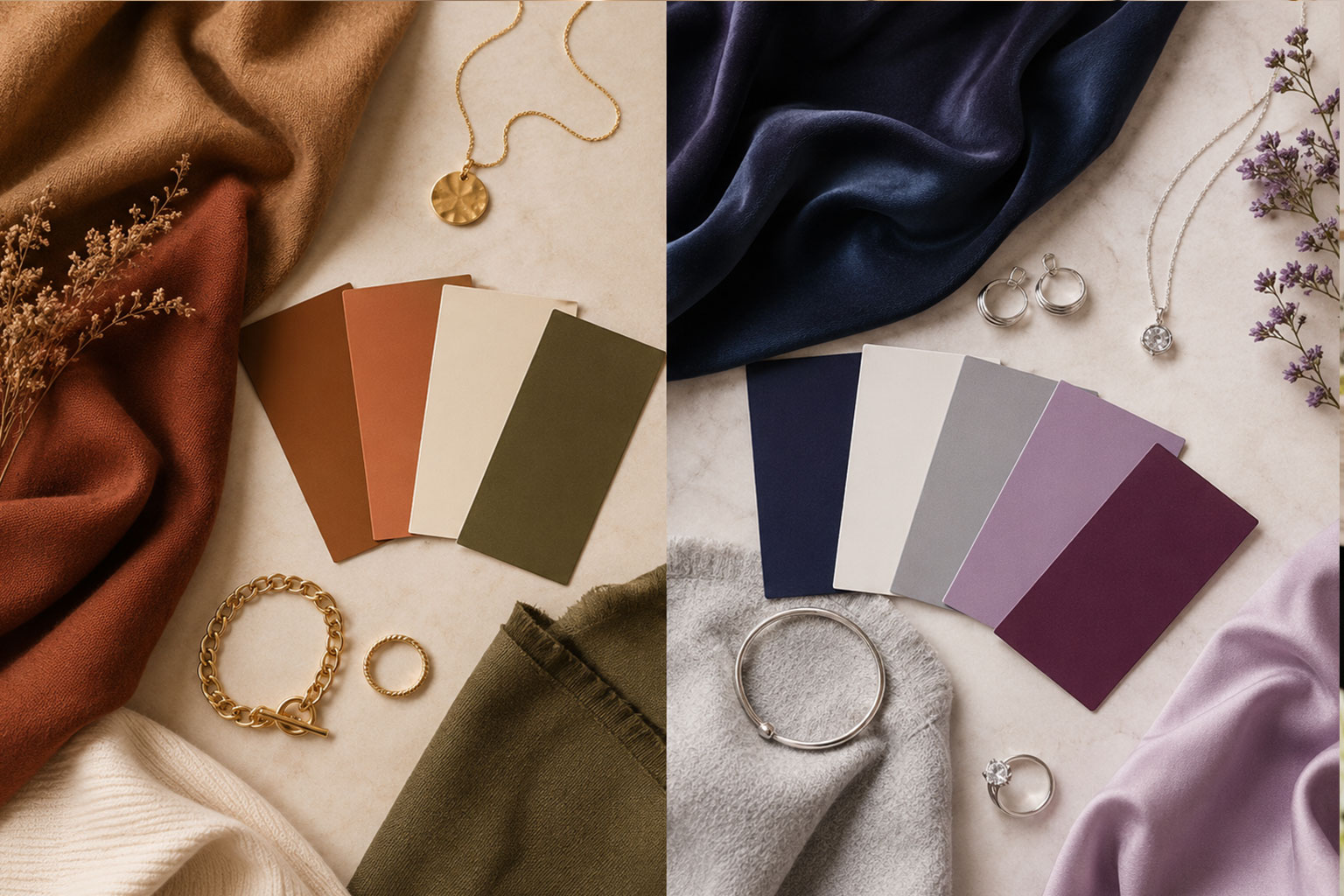
As a personal stylist in London I see the same pattern every week: the client who bought black because it was sensible, and whose face lights up the moment she holds chocolate or navy instead.
Coats, Shoes and the Seasons You Actually Live In
Three practical checks, because a bag is never seen alone.
Your coats. In London a coat is worn for much of the year, so your first bag must sit happily with the two you wear most. Camel coat: tan, chocolate, navy, burgundy. Black coat: black, burgundy, white, red. Navy coat: tan, cream, burgundy. Grey coat: almost anything.
Your shoes. Bag and shoes no longer need to match, but they need to agree. A tan bag with black shoes works when a belt or a cream knit bridges them. If your shoes are mostly black and you want brown, choose chocolate rather than tan.
Your seasons. A white bag bought for summer may feel seasonal; a navy one can work all year. If you move between climates, my guide to the travel capsule wardrobe explains why I pack one neutral bag for every outfit in the case, usually tan or navy, because both photograph better than black in sun.
Leather and Hardware Finish by Colour
The same colour looks different in smooth calf, grained leather, suede or patent, and the hardware changes it again. Choose the finish for the way you live, then the hardware for your colouring.
Grained leather forgives a busy life; smooth leather rewards a careful one. To understand how finish, construction and colour affect the way a bag ages before you spend, my online investment pieces and designer bags masterclass at £15 walks through exactly that.
Resale and Wear: A Judgement, Not a Statistic
Clients often ask which colour holds its value. I will not quote figures, because resale depends on the model, the condition and the moment, and anyone who promises otherwise is guessing. What I can offer is judgement.
Neutrals are the easiest to live with and the easiest to pass on. Black, tan and navy suit the widest range of buyers for the same reason they suit the widest range of outfits; burgundy sits close behind. Pale colours carry visible wear and ask more of their next owner. Bright colours find a buyer who loves them, a smaller group, so buy them for love rather than for exit.
None of this should stop you buying the cornflower bag. It should only stop you buying it first. If you dress on a careful budget, the same logic runs through my guide on how to look expensive on a budget: put the money into the neutral you use every day, and let the colour come later and cheaper.
Which Colour Designer Bag: Frequently Asked Questions
What colour handbag goes with everything?
No single colour goes with every wardrobe, but navy comes closest for most women, because it works with black, white, cream, camel, grey, denim, burgundy and red. Black is the answer for cool, high-contrast wardrobes; tan or chocolate for warm ones. Choose the neutral that matches your coats and shoes, and it will go with everything you own.
Should my first designer bag be black?
Only if your wardrobe and colouring call for it. Black is right if you wear tailoring, dark denim and monochrome and have cool or high-contrast colouring. If your wardrobe runs warm, with camel, cream and olive, or your colouring is soft, a chocolate, tan or navy bag will be carried far more often and will flatter you more.
Is a white designer bag a good investment?
White and cream are considered second or third bags rather than first ones. They look expensive against dark clothing and photograph beautifully, but pale leather shows colour transfer from denim and marks from daily use, so it asks for cleaning and care. Buy it once your neutral is in place, and choose cream over optic white if your colouring is warm.
Is burgundy a neutral for a designer bag?
In practice, yes. Burgundy and oxblood pair with black, navy, grey, camel, cream, denim and most greens, hide wear well and bring warmth to a dark outfit. It is my preferred second bag for a black-and-grey wardrobe. Choose a brick-leaning burgundy for warm colouring and a blue-leaning wine for cool colouring.
Which blue designer bag is the safest choice?
Navy. It behaves like a softer black, flatters nearly every colouring and works with every pair of jeans you own. Cornflower, cobalt and light blue are beautiful but limited, so they belong at position three, once black, tan or navy is handling the daily work. Light blue in particular marks as easily as white.
Should the bag match my shoes?
Not exactly, but the two should agree. Bag and shoes in the same colour family look considered; a tan bag with black shoes needs a belt or a knit to bridge them. If most of your shoes are black and you want a brown bag, chocolate sits with them more easily than tan does.
The Short Version
Buy your designer bags in order, not in the order you fall for them. First, the neutral that matches your coats, your shoes and your colouring: black for cool and high-contrast wardrobes, tan or chocolate for warm ones, navy for anyone in between. Second, burgundy, cream or a second neutral to fill the gap the first one left. Third, the colour you love. Check every colour against your face as well as your clothes, choose the finish for the life you lead, and treat resale as a judgement rather than a promise. For which bags deserve that first-neutral spot, my timeless designer bags guide is the next read. And if you would like me beside you while you decide, the first conversation costs nothing.