Have you ever opened a full suitcase in a hotel room and still felt you had nothing to wear? Overpacking is almost always a planning problem, not a space problem. When you are unsure which pieces work together, you bring everything and decide later, and later never comes.
A travel capsule wardrobe fixes that before you leave. In this guide I show you how I plan one for clients: the two formulas I use, the fabrics that travel well, packing lists for city breaks, business trips, beach holidays and cold weather, and a worked example that turns 12 pieces into 14 outfits over seven days. If you would rather hand the whole job over, my Style & Pack travel capsule service builds it with you, in person or online, from the clothes you already own.
What Is a Travel Capsule Wardrobe?
A travel capsule wardrobe is a small, planned set of clothes for one trip, where each piece works with at least three others. You choose a base palette, pick fabrics for the climate and plan your outfits before you pack, so each item earns its place in the case.
I hold every capsule to three rules:
- Each piece works with at least three others. If a top only goes with one pair of trousers, it stays at home.
- Every outfit suits at least two occasions. A look that only works for one dinner is a costume, not a capsule.
- Nothing is new to you. Travel is the wrong moment to discover that a pair of shoes rubs or a shirt creases badly.
If you have never built an everyday capsule, my guide to how to create the perfect capsule wardrobe covers the foundations. Packing for a trip applies the same thinking to one itinerary and one suitcase.
How Many Pieces Do You Need? Choose Your Formula
For most trips of a week, 10 to 14 pieces are enough, provided they all coordinate. I work from one of two formulas, depending on how varied the itinerary is.
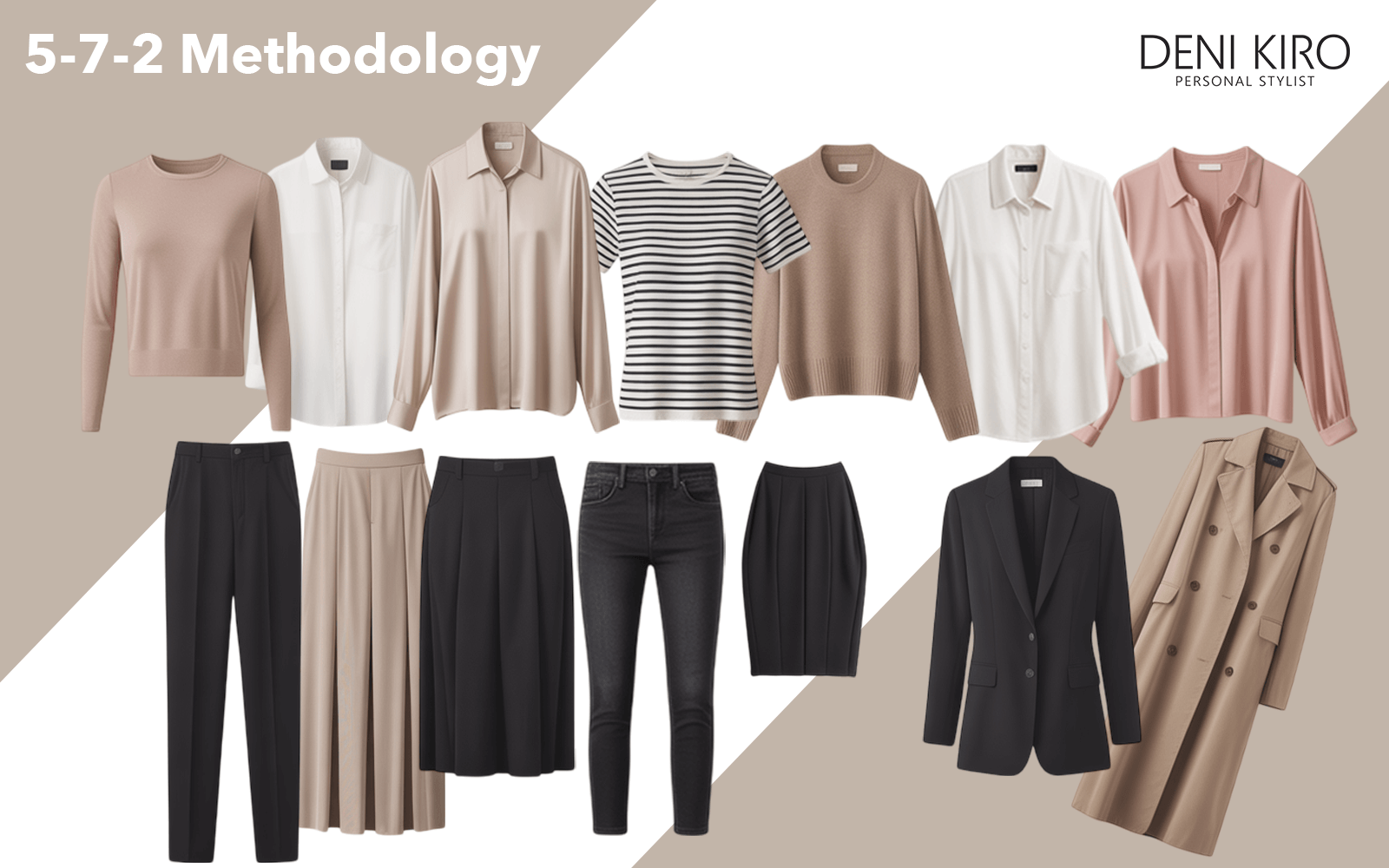
The 5-7-2 Method
Best for: business travel, varied plans and trips where formality changes from day to night.
- 5 bottoms: trousers, skirts or jeans
- 7 tops: from casual to polished
- 2 layers: a blazer, a cardigan or a coat
The extra tops are the point. They let you change the feel of the same trousers from a morning meeting to a client dinner.
This is how the 5-7-2 edit looks when it is laid out before packing.
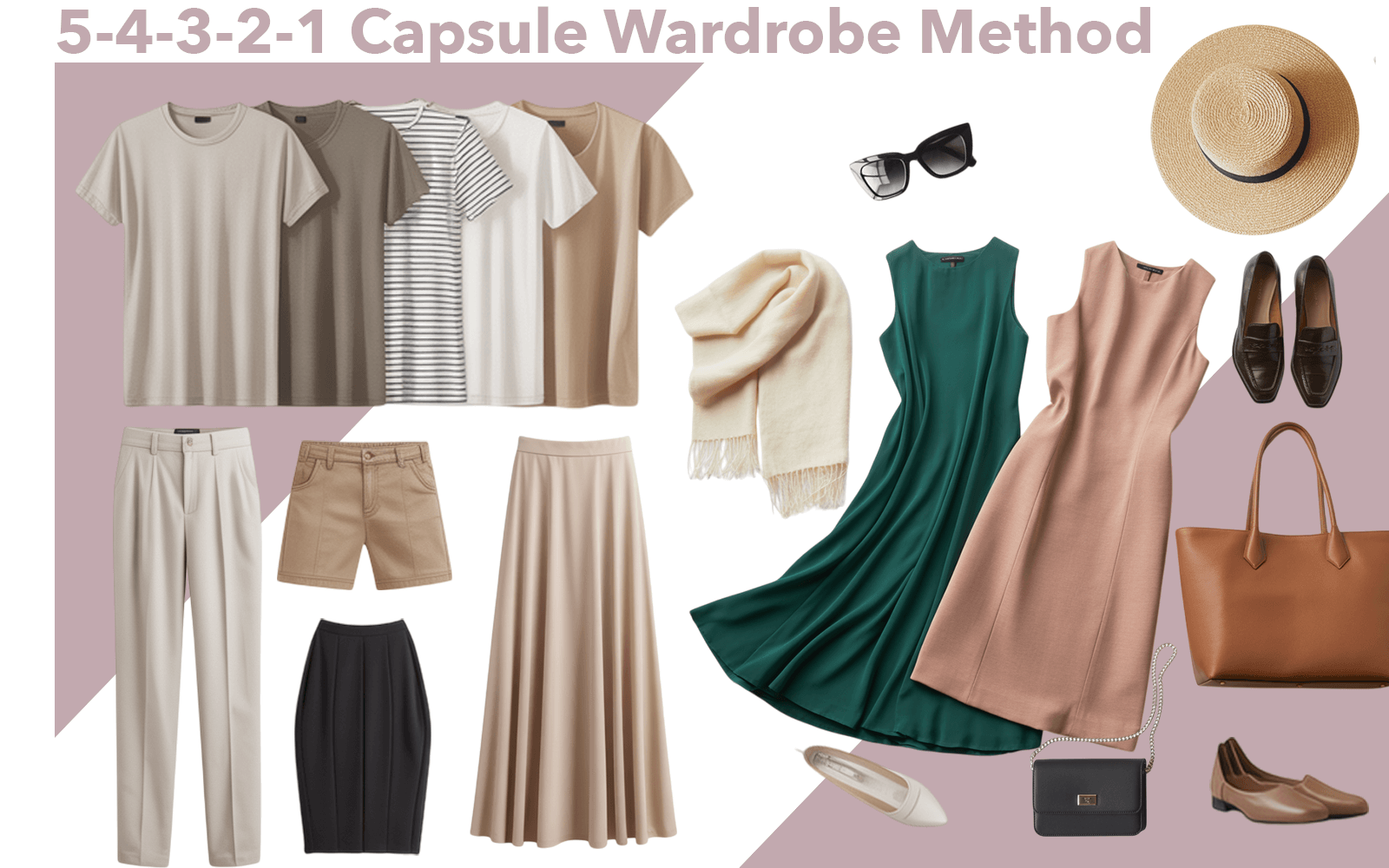
The 5-4-3-2-1 Method
Best for: short trips, carry-on only and a single climate.
- 5 tops
- 4 bottoms
- 3 pairs of shoes
- 2 dresses or layers
- 1 of each accessory: one bag, one hat, one piece of jewellery you love
It is stricter, which is exactly why it suits a small bag.
Here is the 5-4-3-2-1 capsule as a flat lay, so you can see how little space it takes.
Not sure which one fits your trip? Use this quick match.
Start With Colour: Your Base Palette
The palette is what makes the maths work. Choose two or three neutrals and one or two accent colours, so that every piece in the case works with at least three others.
- Neutrals: navy, black, grey, camel, ecru or white. Pick the ones you already wear most.
- Accents: one or two colours that flatter your complexion, worn near the face in a shirt, knit or scarf.
- One metal: gold or silver for buckles and jewellery, so accessories never clash.
Which neutrals suit you best? My guide to colour analysis for your wardrobe explains how to tell, and it saves you packing pieces that look tired in holiday light.
Fabrics That Travel Well
Fabric decides whether you arrive looking polished or crumpled. Choose fibres that breathe, recover from folding and can be worn more than once.
- Merino wool: my first choice for knitwear and base layers. The Woolmark Company explains that merino reacts to changes in body temperature, keeping you warm when it is cool and cool when it is hot, and locks away odour molecules until it is washed. That is why I happily wear one fine merino jumper more than once on a trip.
- Cotton jersey and ponte: soft, forgiving and quick to shake out after a day in a suitcase.
- Linen: a comfortable fabric for heat, but it creases. Pack it for the beach and make peace with the texture.
- Silk and silk blends: light, packable and instantly dressy for evenings.
- Wool tailoring: a good wool blazer or pair of trousers usually relaxes overnight on a hanger.
Which knitwear earns a place? One fine-gauge merino crew or V-neck and, for cold evenings, one cashmere jumper cover most trips. Anything chunky travels on you, not in the case.
Packing List: The City Break Capsule
European city breaks mean lots of walking, unpredictable weather and, in my experience, cities where good fabric and fit are noticed. Quality basics serve you better than logos.
- Bottoms: dark jeans, black tailored trousers and a midi skirt
- Tops: a white shirt, a striped tee, a silk blouse and a merino jumper
- Dress: one day dress that dresses up with a blazer
- Layers: a trench coat and a lightweight blazer
- Shoes: white leather trainers for walking and loafers or low ankle boots for dinner
Day exploring: jeans, striped tee, trench and trainers. Museum and lunch: midi skirt, silk blouse, blazer and loafers. Dinner out: black trousers, merino jumper, trench and ankle boots.
This is the kind of city break capsule I put together for clients.

Heading to Milan? My guide to where to shop in Milan helps you leave room in the case for what you bring home.
Packing List: The Business Travel Capsule
Frequent business travel asks for a wardrobe that looks polished in meetings, at dinners and on the flight home. The secret is fewer, better pieces in one tight palette.
- Tailoring: one suit, or a blazer and two pairs of trousers that work with it
- Tops: three shirts or blouses and one fine knit that looks right under a jacket
- Dress: one jersey or ponte dress for a conference day or a client dinner
- Shoes: one pair you can stand in all day and one smarter pair for evenings
- Small extras: a scarf, a slim belt and a structured bag that holds a laptop
Conference capsule tip: plan one outfit per day and one spare top. Long days under air conditioning favour a knit or blazer you can take off, not a heavy coat.
Business dress codes also differ by city, as this comparison shows.

For the City, my London business dress code guide sets out what each level of formality looks like. Men travelling for work can adapt the list with the formulas in my men’s capsule wardrobe guide, where an overshirt or a navy blazer plays the role of the second layer.
Packing List: The Beach and Resort Capsule
A resort capsule has one job: take you from the pool to lunch to dinner without a full change each time.
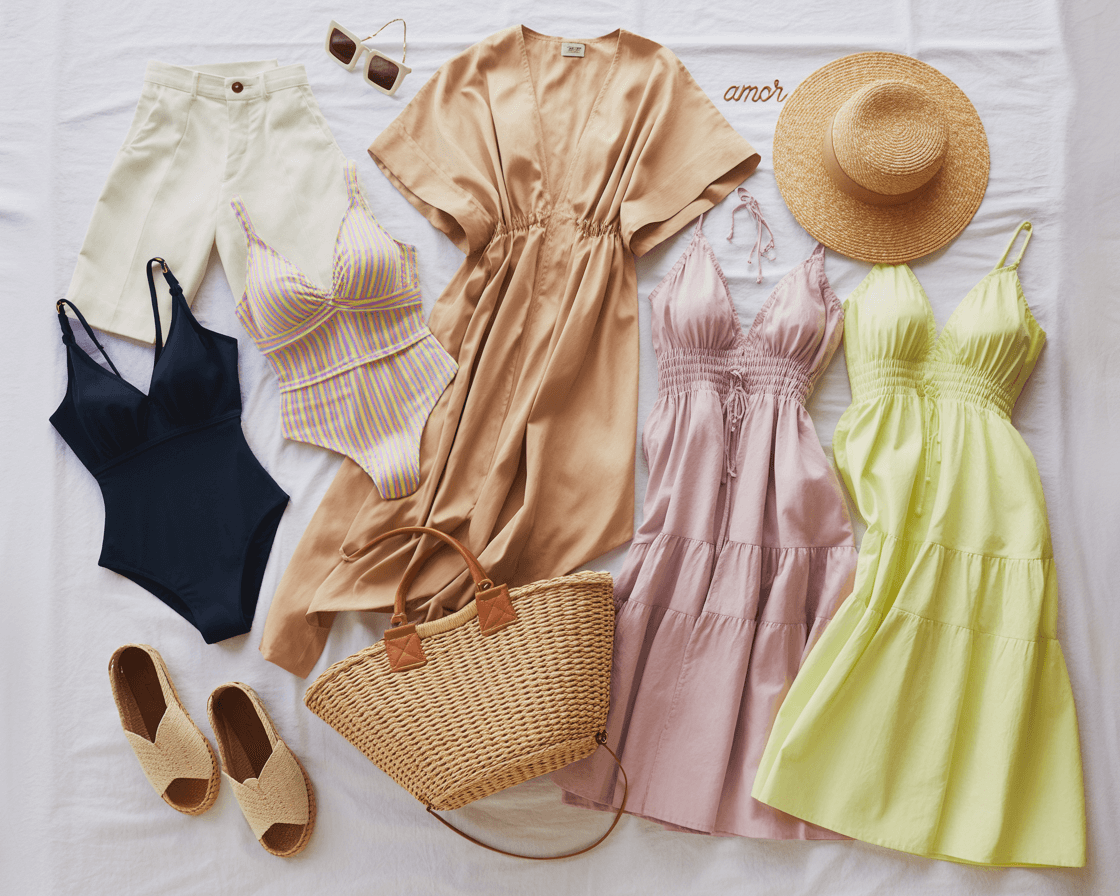
- Swimwear: two or three swimsuits and a cover-up that doubles as a dress
- Day: linen shorts, linen trousers and two cotton tops
- Evening: two dresses in different lengths, plus a light cardigan for air conditioning
- Shoes: flat sandals, espadrilles and one dressier sandal
- Accessories: a wide-brimmed hat, sunglasses and a woven bag
Pool day: swimsuit, kaftan, sandals and hat. Resort lunch: linen shorts, cotton top and espadrilles. Sunset dinner: a maxi dress, light cardigan and dressier sandals.
Here is a resort capsule laid out from pool to lunch.
How to Pack Two Evening Outfits Without Overpacking
Do you want a capsule but still need a couple of outfits that feel special? It is a question I hear often, and the answer is to change the details, not the whole outfit.
- One dress or silk piece does the heavy lifting. A black jersey dress or a silk blouse with tailored trousers reads as evening on its own.
- Shoes and jewellery carry the change. Swap trainers for loafers or heels, add earrings or a bolder necklace, and the same base looks deliberate.
- Pack one statement accessory. A bright scarf, a beaded bag or a sharp belt weighs almost nothing.
- Keep it in the palette. Your evening pieces must still work with your daytime layers, or they become extra luggage.
The same thinking answers the small-bag question: one bag can cover work, travel and evenings if the layers and shoes do the switching and the base pieces stay the same.
Cold Weather: Warmth Without Bulk
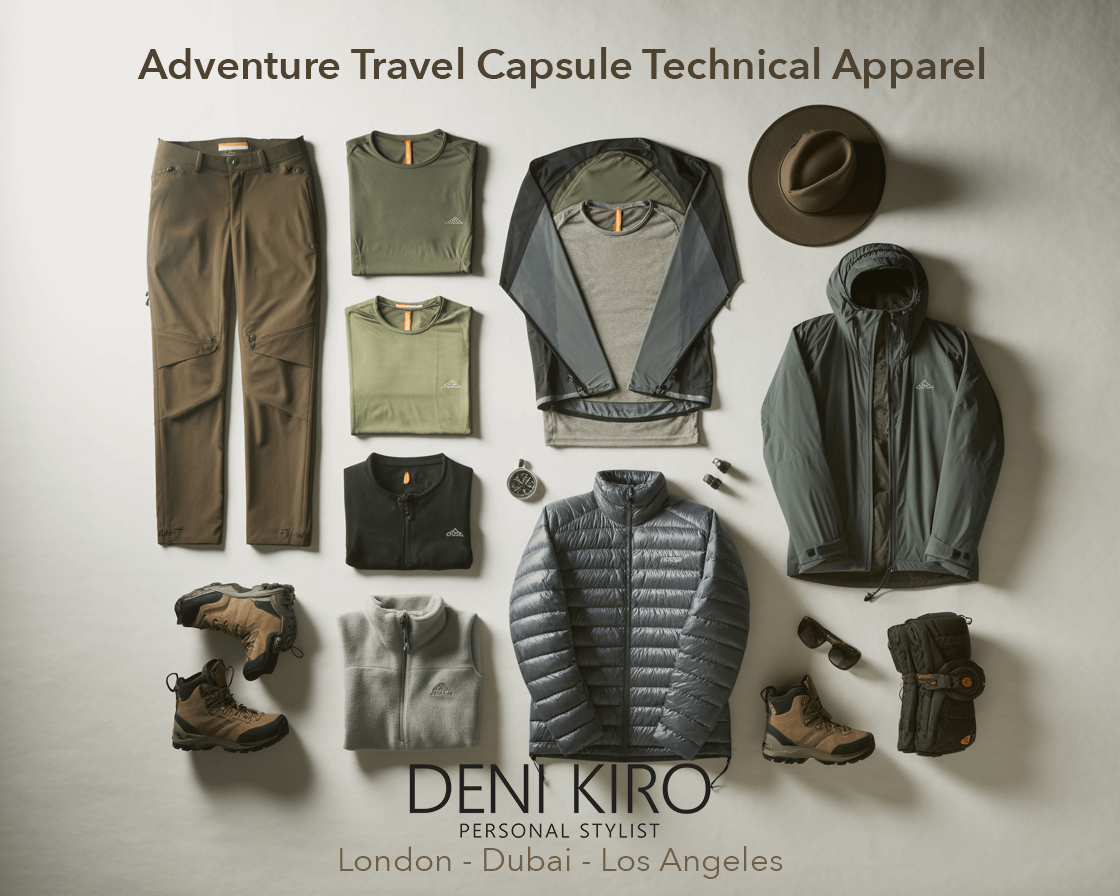
Cold trips tempt you to pack the heaviest jumper you own. Several thin layers pack smaller than one bulky knit and let you adjust through the day.
- Base layer: merino tops and thermal leggings that sit under trousers or dresses
- Mid layer: a cashmere or merino jumper, or a light fleece for active days
- Outer layer: one warm coat you wear on the journey, plus a packable down jacket if you will be outdoors
- Trousers: wool rather than cotton for cold days
- Shoes: waterproof boots you can walk in all day, worn rather than packed
City sightseeing: base layer, wool jumper, coat and warm boots. Indoors: take off the coat to reveal a polished knit. Evening: a thermal base under a dress, with the coat and boots you change out of on arrival.
For mountains, safaris and hiking, the same layering logic applies with more technical fabrics.
Dress Codes Abroad: Pack for Respect as Well as Weather
A capsule should be appropriate wherever the itinerary takes you, not only comfortable. Check local expectations before you finalise the list.
- Dubai and the Gulf: for meetings, I suggest tailoring that covers shoulders and knees. My Dubai business dress code guide covers offices, evenings and smart casual in detail.
- Religious sites: many set their own dress rules, so check the site’s own guidance before you go. I always pack a long skirt or loose trousers and a light scarf, so covering shoulders and knees is never a problem.
- European restaurants: smart casual is a safe minimum for dinner, and a blazer solves most doubts.
This infographic sums up how the same capsule adapts to different settings.

A 7-Day Plan: 12 Pieces, 14 Outfits
Here is the maths made real. These 12 pieces build 14 different outfits, one for the day and one for the evening, across a seven-day city trip.
- 3 bottoms: dark jeans, black tailored trousers, a midi skirt
- 4 tops: a white shirt, a striped tee, a silk blouse, a navy merino jumper
- 1 dress: a black jersey dress
- 2 layers: a trench coat, a navy blazer
- 2 pairs of shoes: white leather trainers, black loafers
No outfit repeats, and every piece is worn at least twice. Lay the outfits out and photograph them before you pack; on the trip, you simply follow the plan. Men can run the same grid by swapping the skirt, silk blouse and dress for chinos, a knitted polo and an overshirt.
Carry-On Only: Making It Fit
Can you really travel for ten days with hand luggage? Yes, if the plan comes first and the bulk travels on you.
- Use the 5-4-3-2-1 formula and a palette of two neutrals.
- Wear your heaviest pieces on the journey: coat, boots and jumper.
- Roll knits and jersey, fold tailoring, and keep shoes in bags at the base of the case.
- Carry one complete outfit in your personal item, in case the case is delayed or you land straight into a meeting.
- Plan one wash. Choose a top or two you can rinse in the evening and hang to dry overnight.
Before you pack anything, it helps to know what you own and what is missing. My sort, shop and style method walks you through that edit, and it makes every future capsule faster to build.
When to Ask a Stylist to Build It With You
For a honeymoon, a long-haul trip or a heavy business schedule, it can be worth handing the planning over. My Style & Pack Travel Capsule Wardrobe service has two options: Classic at £595 for returning clients or short trips, and Signature at £750 for extended trips or first-time clients. Working with you at home or by video call, I plan and organise a complete capsule around your destination, dress codes, activities and trip length, built from your own wardrobe wherever possible, with recommendations for missing pieces only when they are genuinely needed.
It works best after an edit. If your wardrobe has not been sorted recently, my Online Wardrobe Edit (£450) gives you a clear foundation first, and a one-to-one style consultation (£150) is the simplest place to start. Those two services are also listed on my personal stylist London prices page; the current Style & Pack options are on the service page linked above.
Packing a Travel Capsule: Frequently Asked Questions
How many clothes do I need for a week away?
For most week-long trips, 10 to 14 pieces are enough if your tops, bottoms and layers all coordinate. The 12-piece plan above builds 14 outfits, one for the day and one for the evening across seven days. Shoes count as pieces; accessories do not.
Which is better, 5-7-2 or 5-4-3-2-1?
Use 5-7-2 when formality changes through the trip, because the extra tops let one pair of trousers work from a meeting to dinner. Use 5-4-3-2-1 for short, carry-on trips in a single climate, where the stricter limits keep the bag small.
What are the best fabrics to pack for travel?
Merino wool for knitwear and base layers, cotton jersey and ponte for comfort, silk for evenings and wool for tailoring. Linen is ideal in heat but creases, so pack it for the beach rather than for meetings.
How do I include evening outfits in a small capsule?
Let one dress or silk piece carry the evening, then change shoes and jewellery rather than the whole outfit. Add one statement accessory, such as a bright scarf or beaded bag, and keep every evening piece within your daytime palette.
Can I travel carry-on only for ten days?
Yes, with a plan. Use the 5-4-3-2-1 formula, wear your bulkiest pieces on the journey, choose fabrics you can rinse and dry overnight, and carry one complete outfit in your personal item in case of delays.
How do I stop clothes creasing in a suitcase?
Choose fabrics that recover from folding, such as merino, jersey, ponte and wool. Roll knits, fold tailoring along its seams, and hang everything as soon as you arrive. A small travel steamer deals with the rest.
The Short Version
- A capsule for travel is a small, planned set of pieces where each one works with at least three others.
- Pick a formula: 5-7-2 for varied or business trips, 5-4-3-2-1 for short, carry-on trips.
- Start with colour and fabric: two or three neutrals, one or two accents, and fibres that breathe and travel.
- Plan the outfits before you pack, including evenings, and photograph them.
- Twelve good pieces can make fourteen outfits, as the seven-day plan shows.
Where are you travelling next, and what does the itinerary ask of your wardrobe? If you would like a capsule built around your trip, the free initial consultation is the simplest way to start.